.jpg)
UVB Phototherapy for Vitiligo: The Complete Home Treatment Guide
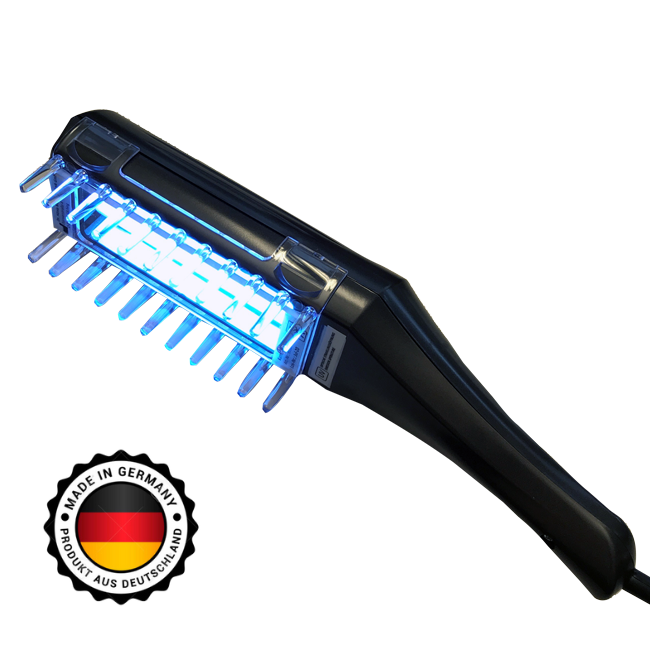
Phototherapy – treating the skin with narrowband UVB light at 311 nm – is the best-documented and most effective treatment for vitiligo available today. Dermatology clinics have used it for decades; the difference now is that the same medical lamps are available for home use, so you can treat every other day instead of driving to a clinic twice a week.
This guide explains how narrowband UVB repigments vitiligo, exactly how to dose it, how often to treat, which lamp to choose and what to combine it with for the best result.
How does UVB phototherapy repigment vitiligo?
Narrowband UVB light does three things in a vitiligo patch:
- It calms the immune attack. UVB suppresses the T-cells that destroy melanocytes, so the patch stops growing.
- It wakes up dormant melanocytes. Even in a white patch, melanocyte stem cells survive in the hair follicles. UVB stimulates them to multiply and migrate back into the skin – which is why repigmentation appears first as small brown dots around hair follicles that slowly merge.
- It boosts melanin production in the melanocytes that return.
The 311 nm wavelength is used because it gives the strongest therapeutic effect with the least redness, burning and long-term skin damage – far safer than broadband UVB, PUVA (psoralen + UVA) or tanning beds.
Clinic or home phototherapy?
Both use the same 311 nm technology. The practical differences:
| Clinic | Home lamp | |
|---|---|---|
| Frequency | 2–3× per week, appointment-based | Whenever you want, 3× per week recommended |
| Cost | Per session, for 6–14 months | One-off purchase (from 169 €) |
| Body coverage | Full-body cabin | Handheld lamp, patch by patch |
| Supervision | Dermatologist sets doses | You follow the protocol, dermatologist checks progress |
For vitiligo limited to hands, face, elbows, knees or a few patches – the majority of cases – a handheld narrowband UVB lamp is the practical choice. For vitiligo covering most of the body, a clinic cabin or a larger panel is more efficient.
Which UVB lamp for vitiligo?
All lamps in our shop emit narrowband UVB at 311 nm and are CE-certified medical devices:
- Philips BU-1S – the compact bestseller with a Philips 9 W 311 nm tube, treatment area 5 × 15 cm, comb attachment for the scalp. The right first lamp for most people.
- Philips BU-10 – the same tube with a built-in timer and LCD display, so every session is dosed to the second.
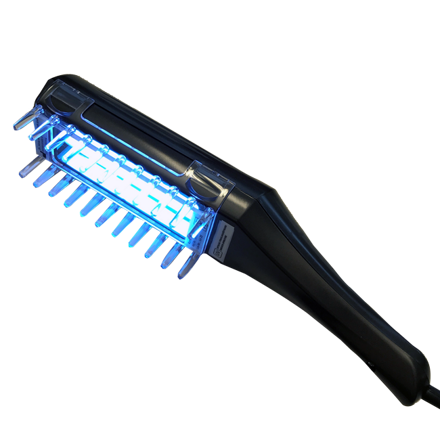
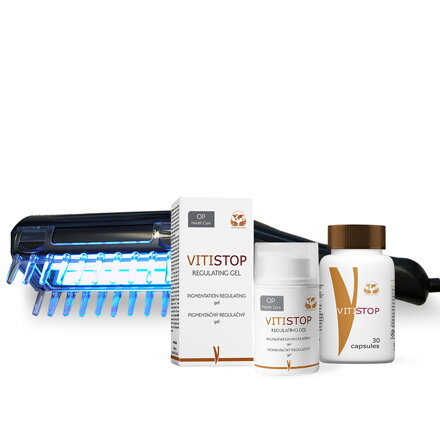
- Dermalight 80R – the German clinical-grade handheld lamp used by dermatologists, with the highest irradiance and the shortest session times. Also available as a complete treatment package with Vitistop gel and tablets.
- Kernel KN-4003BL2 – compact lamp with OLED timer.
Every lamp comes with a comb attachment, which doubles as a spacer to keep the correct distance from the skin.
Home UVB protocol for vitiligo
This is the protocol our customers follow and the one our founder used to repigment his own vitiligo. Always discuss it with your dermatologist, especially for children or if you take medication that increases light sensitivity.
Step 1 – Find your starting dose
- Hold the lamp directly on the skin (the comb/spacer ensures the right distance).
- First session: 20 seconds per area (one lamp area is about 11 × 4 cm).
- Increase by about 15–20 seconds at each session, up to a maximum of 4–5 minutes per area.
The goal is light pinkness of the patch that appears a few hours after the session and fades by the next day. That is the sign the dose is right.
- No pinkness at all → increase the time at the next session.
- Redness that lasts more than two days, or stinging → the dose is too high. Go back by about 45 seconds (for example from 4:00 to 3:15) and stay there.
Every skin is different: fair skin reaches its dose sooner, darker skin tolerates longer sessions. Never "catch up" missed sessions with a longer exposure.
Step 2 – How often to treat
- Months 1–3: three times a week, with at least one day between sessions (e.g. Mon / Wed / Fri).
- From month 4: twice a week until the patch has filled in, then taper to once a week for a few months to stabilise the result.
The average course is 4–14 months. First brown dots inside the patch typically appear after 6–12 weeks; hands and feet are the slowest, face and trunk the fastest.
Step 3 – Protect the treated skin
- Wear the supplied goggles when treating the face; never look into the lamp.
- On sunny days apply SPF 50+ to treated patches after the session – treated skin plus sun equals a double dose.
- In summer, if you are regularly in the sun, pause the lamp or reduce sessions to avoid burning. Sunburn can trigger new patches.
- Do not treat over moles or broken skin.
What to combine phototherapy with
Phototherapy alone works; phototherapy combined with the right topical and internal support works faster. Our recommended combination:
1. Vitistop gel – apply 60 minutes before each session. The gel contains superoxide dismutase (SOD), babchi seed oil (Psoralea corylifolia), copper, zinc and vitamins B5 and B12, and is formulated to prepare the patch for light exposure. Because it increases the skin's light sensitivity, dose the lamp carefully on days you use it, and always use SPF 50+ if you are then in the sun for more than 10 minutes.
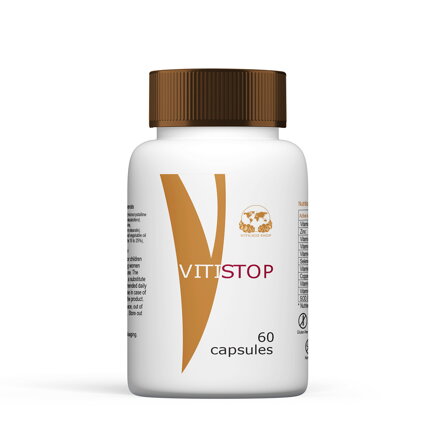
2. Vitistop tablets – one tablet every morning after breakfast. An antioxidant complex (EXTRAMEL® melon extract, vitamins C, E, B9, B12, zinc, copper, selenium) that covers the nutrients most often low in vitiligo; no other supplement is needed alongside it. After 3 months take a 2–4-week break.
3. Prescription creams (tacrolimus/Protopic, ruxolitinib). Excellent in combination with UVB – but apply them after the session or on non-lamp days, never immediately before, and follow your dermatologist's instructions.
4. Diet and lifestyle. Antioxidant-rich food, enough vitamin D, chlorella, marine collagen, sleep and stress control – see Vitamins and vitiligo and Vitiligo and stress.
Is home UVB phototherapy safe?
Narrowband UVB has been used for over 30 years and, unlike PUVA, has not been linked to an increased skin-cancer risk at the doses used for vitiligo. The main risks are sunburn-like redness from overdosing (avoidable with the protocol above) and eye damage if you look into the lamp without goggles. People with lupus, xeroderma pigmentosum, a history of melanoma or who take photosensitising medication should not use UVB without medical advice.
Frequently asked questions
How long does it take to see results?
The first pigment dots usually appear after 6–12 weeks of consistent treatment. Full repigmentation of a patch takes months; hands and feet can take a year or more.
Can children use a UVB lamp?
Yes – narrowband UVB is one of the few treatments recommended for children – but only under a dermatologist's supervision and with an adult operating the lamp.
Does the pigment stay after I stop?
In most cases yes, especially if you taper down slowly and keep protecting the skin. Some people need occasional maintenance sessions.
Can I use a tanning bed instead?
No. Tanning beds emit mainly UVA, which does not repigment vitiligo and burns the unprotected patches.
Lamp or clinic – which is cheaper?
A home lamp pays for itself within roughly 10–15 clinic sessions, and you treat three times a week instead of two.
Ready to start? Read the step-by-step vitiligo treatment protocol, see what other customers achieved in Your results, or ask us which lamp suits your case.
-
 Add to Favourites
Clinically Used Device
Dermalight® 80R UVB
(1400010)Premium German handheld UV lamp for home light treatment with UVB radiation with a wavelength of 311 nm.
In stock (5 pcs)
345 €
-
 404 €
12%
Add to Favourites
404 €
12%
Add to FavouritesDermalight® 80R UVB + Vitistop gel and tablets
German handheld UV lamp for home light treatment with UVB radiation with a wavelength of 311 nm.
In stock (23 pcs)
355 €
404 € Discount 12.1%
-
 Add to Favourites
TOP SEARCHED
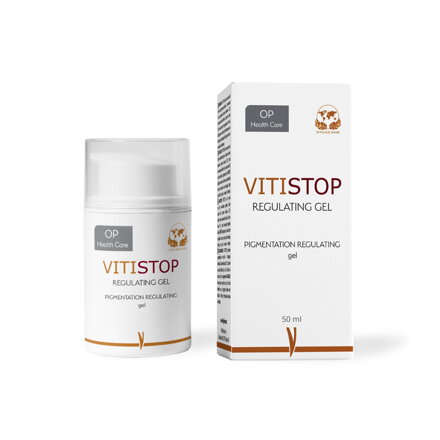
Vitistop gel
Vitistop Gel is an innovative, next-generation cream developed in collaboration with dermatologists to reactivate dormant pigment-producing cells. Its unique formula maximises the effects of UVB phototherapy or sunlight, helping to actively slow the progression of vitiligo and restore lost pigmentation.
In stock
from 40 €
-
 33 €
12%
Add to Favourites
33 €
12%
Add to FavouritesTOP SEARCHED
Vitistop "60" - New Formula
(1100022)Vitistop Tablets are a once-daily supplement designed for people with vitiligo who want to support their skin from within. The formula combines patented EXTRAMEL® melon extract (SOD), L-Tyrosine, vitamins and key minerals to support antioxidant defence, normal skin function and natural pigmentation processes.
In stock (109 pcs)
29 €
33 € Discount 12.1%
-
 Add to Favourites
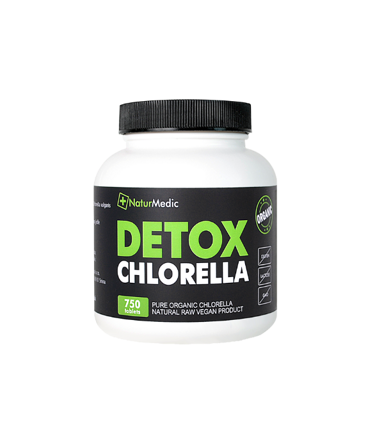
Chlorella Japan 750 tbl
(1020030)100% BIO product to support the detoxification and proper functioning of the immune system.
In stock (9 pcs)
16 €
-
 Add to Favourites
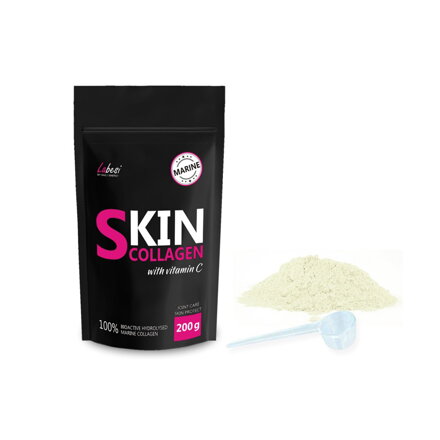
Marine collagen 200g
(1020010)100% pure bioactive marine collagen powder made from fish by special enzymatic hydrolysis.
In stock (1 pcs)
30 €
Poll
Have you tried to include phototherapy in the treatment process?