.jpg)
Vitiligo on the neck: what triggers it, how it is treated and skin protection
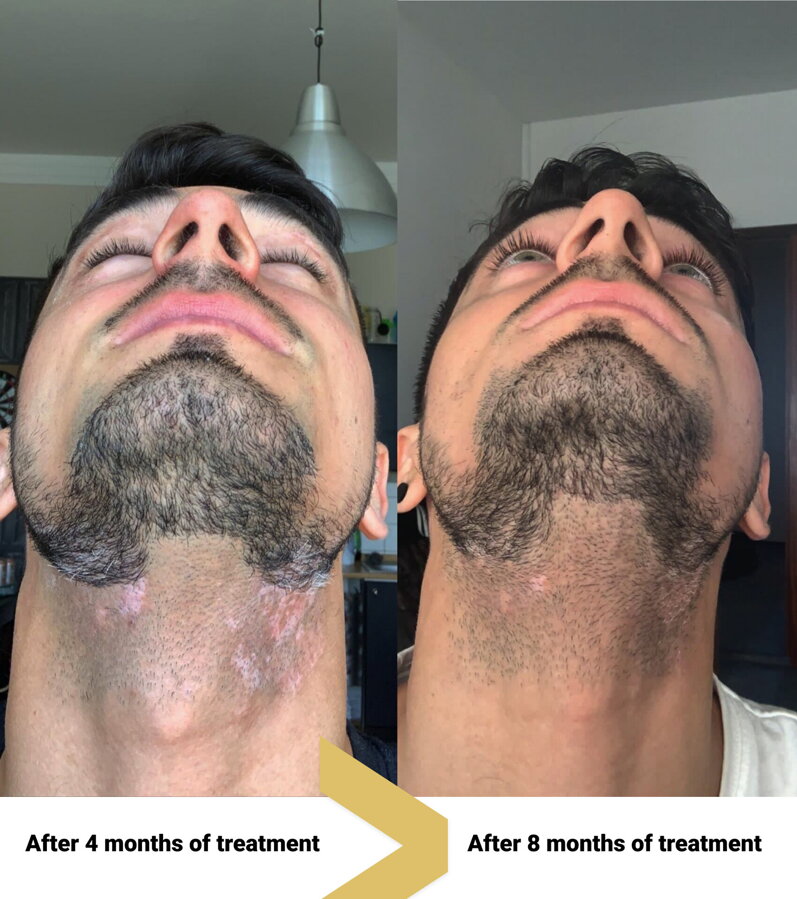
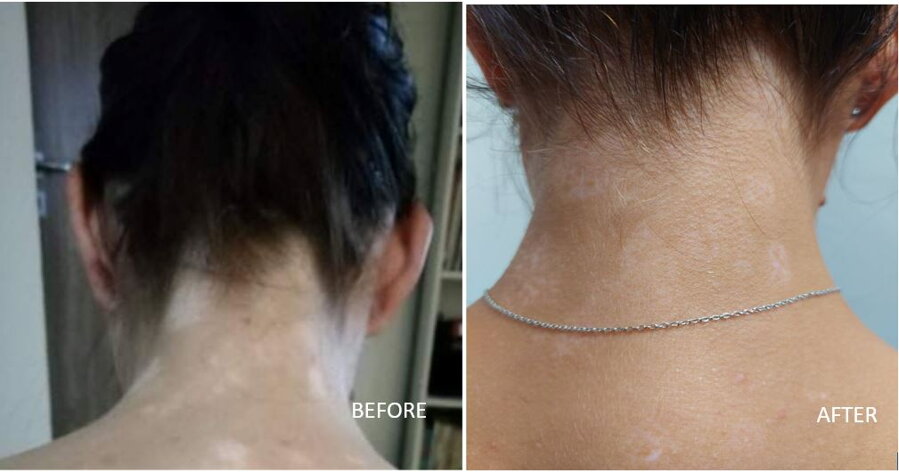
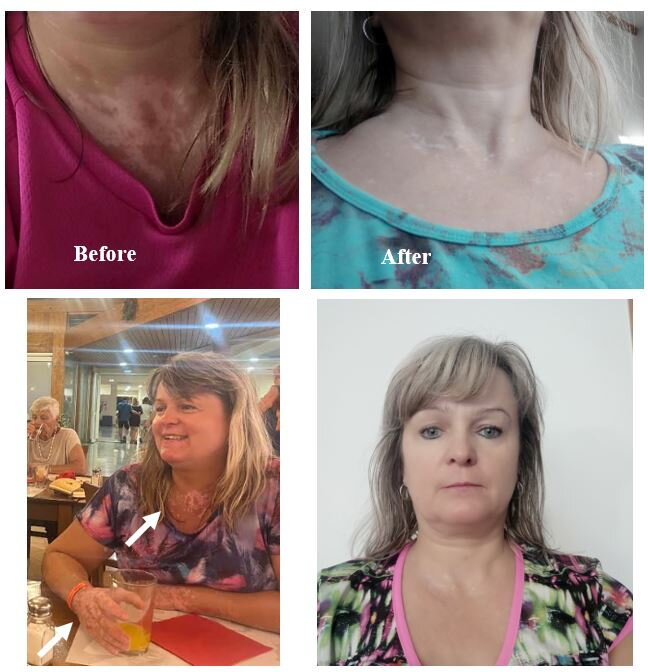
On the neck, patches tend to develop precisely where something rubs day after day – a shirt collar, a scarf, a chain or the seat belt. Most clothes leave this area uncovered, and in summer it is on display. There is good news, though: dermatologists observe that the face and neck generally do better with treatment than the hands and feet, and the photos sent in by our customers show how much steady care can achieve.
- Friction from collars, chains, scarves and straps frequently triggers vitiligo on the neck or makes existing patches worse.
- Like the face, the neck usually shows a good response to treatment (DermNet, British Association of Dermatologists).
- The usual order is prescription creams first, then narrowband UVB light (311 nm), which is simple to carry out at home with a handheld lamp.
- People with vitiligo are more likely to have other autoimmune conditions, particularly thyroid disease – asking your GP for a check is a good idea.
- The neck catches the sun almost all year round, so applying sunscreen every day matters.
What vitiligo on the neck looks like
Neck patches are chalky white, sharply outlined and do not hurt. Typical locations are the front of the throat and the area beneath the chin, the sides of the neck where a collar rests, and the nape along the hairline. In men, hairs in the beard area can lose their colour. It is common for patches on the neck to appear together with others on the face, the upper chest or the shoulders.
Why the neck? Friction and the Koebner phenomenon
When someone is prone to vitiligo, repeated rubbing, pressure or small skin injuries can produce new patches – this is the Koebner phenomenon. Around the neck, the typical triggers are stiff collars and ties, chains and pendants, scarves, the straps of backpacks and handbags, seat belts and shaving. A few adjustments go a long way: softer collars, lighter jewellery, a fresh razor blade used with gel, and rotating your clothes so that the same tight top is not worn day after day.
In addition, vitiligo occurs more frequently in people who have an autoimmune thyroid condition. This is unrelated to where the patches happen to be, but if your thyroid function has never been tested, it is worth bringing up with your GP.
Treatment options for vitiligo on the neck
According to the British Association of Dermatologists guideline, treatment should start with a prescription cream: either a potent corticosteroid used for a limited time or tacrolimus ointment, which doctors frequently favour for thin, delicate skin like that of the neck. When a cream alone is not sufficient, the next step is narrowband UVB phototherapy (311 nm), delivered at a clinic or at home with a handheld lamp. Fresh patches typically respond more quickly than long-standing ones, so it is wise not to wait.
Treating vitiligo on the neck at home, step by step
- Roughly half an hour before each light session, spread Vitistop Gel over the patches.
- Expose the neck to a handheld 311 nm UVB lamp two or three times weekly, allowing 48 hours or more between sessions. Keep the first exposures very short and lengthen them only when the skin shows no redness the following day. Put on UV safety goggles, as the neck is close to your eyes.
- Have one Vitistop tablet every day; it supplies copper, which contributes to normal skin pigmentation.
- Every four weeks, photograph the area under identical lighting so that changes become visible.
The Philips BU-1S is easy to move across the neck. Near the hairline or in the beard, the comb attachment of the Kernel KN-4003BL2 lets the light reach the skin between the hairs. Our treatment guide describes the complete process.
Sun protection for the neck
Few areas of the body get as much sun as the neck, and white patches burn in no time. A sunburn may cause vitiligo to spread, while a tan on the surrounding skin makes the contrast stronger. From spring until autumn, put a high-protection sunscreen on the front and back of your neck every morning – the nape in particular is easy to miss.
How to cover vitiligo on the neck
For the neck, self-tan is the most convenient form of camouflage, since it will not leave marks on your collar the way make-up does. Vitistop Self-Tanning Mousse gives a natural-looking shade after a few hours, and the result generally lasts five to seven days. Blend it in with the Velvet Mitt; for the jawline and hairline, the Mini Mitt is more precise. Wait until it is fully dry before slipping on pale clothing. Further products can be found in our camouflage selection.
Would you like advice about your neck? Write to us about your skin – Peter, who has had vitiligo himself since 2016, and his team will help you work out the best approach.
Open the treatment guideOur customers' resultsFrequently asked questions
What causes vitiligo on the neck?
Vitiligo is autoimmune in origin. On the neck, patches are frequently triggered or aggravated by rubbing and tiny injuries from collars, chains, scarves, straps or shaving – a reaction called the Koebner phenomenon.
Does vitiligo on the neck get better with treatment?
In most cases, yes. The neck, like the face, tends to respond better than the hands and feet. Possible treatments are prescription creams and narrowband UVB light, which can also be given at home using a handheld lamp.
Is there a connection between neck vitiligo and the thyroid?
People with autoimmune thyroid disease develop vitiligo more often, regardless of where the patches appear. If your thyroid has never been tested, ask your GP about it.
Is a home UVB lamp suitable for the neck?
Yes, a handheld 311 nm lamp is a good fit for the neck. Keep the first sessions very short, extend them only if no redness appears, wear UV safety goggles and stick to the manufacturer's instructions.
How can I hide vitiligo on my neck?
Self-tanning mousse is the easiest choice, as it does not rub off onto collars. The colour normally lasts five to seven days; allow it to dry completely before you get dressed.
Vitiligo on other parts of the body
Sources: Eleftheriadou V. et al.: British Association of Dermatologists guidelines for the management of people with vitiligo 2021, Br J Dermatol 2022; European Medicines Agency (EMA) – Opzelura (ruxolitinib cream); DermNet – Vitiligo.
This article is general information and does not replace advice from a doctor. Vitiligo should be diagnosed by a dermatologist or another qualified doctor, and any new or changing patch of skin deserves a medical check. Our products are meant to support skin care alongside the treatment your doctor recommends.