.jpg)
Collagen and Vitiligo: What It Can Do for Your Skin
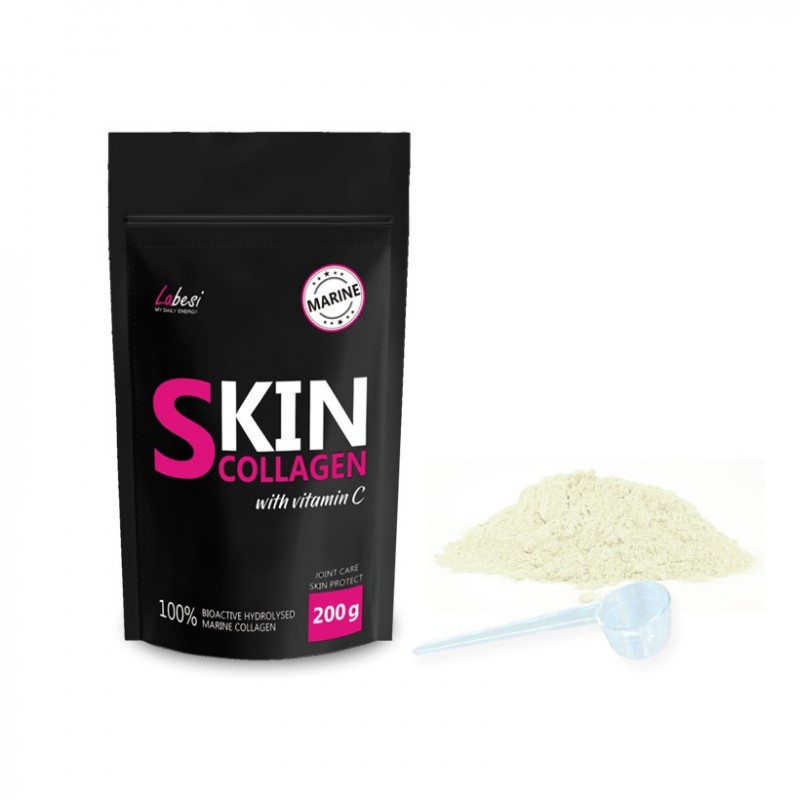
Collagen will not repigment a white patch – it has nothing to do with melanin. So why do we include marine collagen in our vitiligo protocol? Because repigmentation happens in the skin, and the condition of the skin – its hydration, thickness, elasticity and ability to repair itself after UV sessions – decides how well it responds to treatment. Collagen is the structural protein that holds all of that together, and after the age of 25 the body makes less of it every year.
What collagen is
Collagen is the most abundant protein in the body – about 30 % of all protein – and the main component of the dermis, the layer of skin under the surface where melanocytes sit at the border with the epidermis. It gives skin its firmness and elasticity, and it forms the scaffolding for blood vessels, hair follicles and the tissue that heals wounds.
Production peaks in the early twenties, falls noticeably by 40, and by 45 the skin makes very little new collagen. Sun exposure, smoking, sugar and stress speed up the loss – and three of those four are relevant to people with vitiligo.
What the research shows
Oral collagen peptides have been studied mainly in skin ageing:
- Daily collagen supplementation for 8–12 weeks improved skin hydration, elasticity and density in several randomised trials (published in journals such as Journal of Cosmetic Dermatology and Journal of Cutaneous and Aesthetic Surgery).
- Collagen peptides reduced the depth of fine wrinkles and increased skin collagen content in women aged 35–55.
- Collagen supports joint, tendon and bone repair and is widely used by athletes.
There is no clinical trial showing collagen repigments vitiligo, and we do not claim it does. What the evidence supports is healthier, better-hydrated, more resilient skin – the skin you want when you are treating it with UVB three times a week.
Why healthy skin matters in vitiligo treatment
- UVB phototherapy produces controlled micro-stress in the skin; well-nourished skin recovers between sessions, dry damaged skin burns and flakes.
- Friction and injury trigger new patches (Koebner phenomenon); elastic, well-hydrated skin is more resistant.
- Melanocytes migrate back into a patch along the dermal–epidermal junction; healthy dermal structure supports that process.
- Many people with vitiligo are over 40, when collagen loss is already visible.
One of our customers, after almost four years without any change, reported the first signs of repigmentation six months after adding marine collagen with vitamin C to her routine of UVB and Vitistop. One story is not proof – but it is consistent with what collagen does: it makes the skin a better place for treatment to work.
Which collagen and how to take it
- Marine collagen (from fish skin) – type I collagen, the type dominant in skin, with small peptides that are absorbed well. This is the form we sell: Marine collagen 200 g.
- Dose: 5–10 g of collagen peptides a day, stirred into water, juice, yoghurt or a smoothie. Effects on skin are measurable after 8–12 weeks; give it at least three months.
- Take it with vitamin C – the body cannot build collagen without it. Vitistop tablets contain vitamin C; a kiwi or a glass of orange juice with the collagen works too.
- Timing: any time of day; many people mix it into their morning smoothie with chlorella.
- Safety: collagen is a food protein and well tolerated; people with fish allergy should choose a bovine source.
Where collagen fits in the protocol
Collagen is step 5 of our 7-step vitiligo protocol – nutritional support alongside vitamin D and Vitistop tablets. It supports the skin; narrowband UVB and Vitistop gel do the repigmenting. Take it as a long-term habit for skin, hair, nails and joints, and let the lamp do the pigment work.
More on the nutrients that matter: Vitamins and vitiligo and Vitiligo diet.
-
 Add to Favourites
Marine collagen 200g
(1020010)100% pure bioactive marine collagen powder made from fish by special enzymatic hydrolysis.
In stock (31 pcs)
30 €
Poll results
Have you tried to include collagen in the treatment process?
- Yes 24%
- Not 41%
- I will try 34%
Count of voters: 29