.jpg)
1 · What it is
Vitistop Gel – made to work with light
Vitistop Gel is a topical gel developed with dermatologists for the white patches caused by vitiligo. You apply it before every 311 nm NB-UVB session or carefully controlled time in the sun. The gel prepares the skin so that each light session can do more for the return of natural pigment.
Suitable for adults and children aged 3 and over.
2 · How it works
Psoralens help light therapy do more
Vitiligo appears when melanocytes, the cells that make skin pigment, stop working. Light, above all 311 nm narrowband UVB, wakes them up again. Vitistop Gel is rich in psoralens, natural plant compounds that make pigment cells respond more strongly to that light.
+35 %
more repigmentation when psoralen was added to NB-UVB
Faster
first response, with clearly better results on the face, neck and hands
4.48 / 5
average rating from 880 customers who use Vitistop Gel
3 · Recommended by dermatologists
What our medical guarantors say
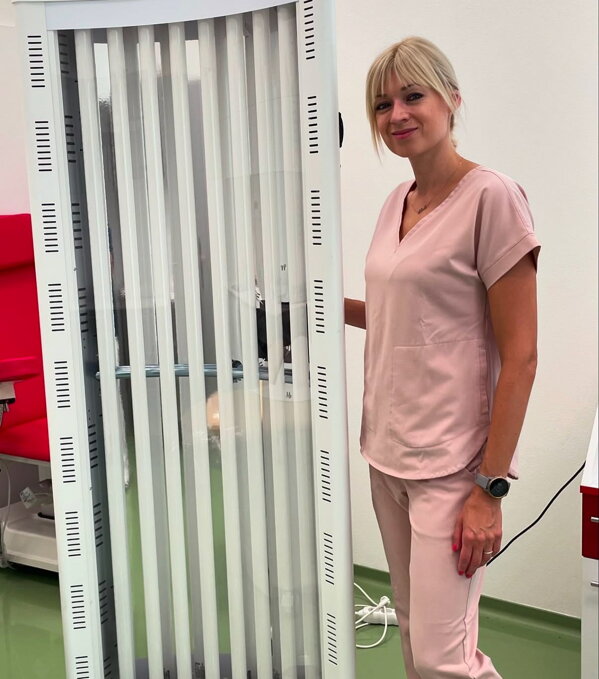
“Since we added Vitistop Gel to phototherapy, pigment starts to return sooner and the treatment itself gives better results.”
Dr Natalia Lobotkova
Dermatologist, Dermanat clinic
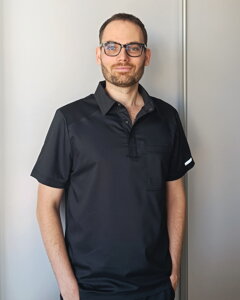
Dr Michael Scheibenreif
Consultant Dermatologist, Medical Adviser of VitiligoShop
Specialist in dermatology and venereology with years of clinical experience in phototherapy for vitiligo, psoriasis and atopic eczema. As our medical adviser, he recommends Vitistop Gel as part of a regular light routine.
4 · Key ingredients
What is inside
- Psoralens from Babchi oil (Psoralea seed oil) – the key active ingredient. Babchi seed is one of the richest natural sources of psoralens (psoralen and isopsoralen), which make pigment cells respond more strongly to UVB light and sunlight.
- Superoxide dismutase (SOD) – helps neutralise free radicals and supports the skin's antioxidant balance.
- Copper and zinc – support important processes involved in normal melanin production.
- Vitamin B12 – contributes to normal skin function and processes linked to pigmentation.
- Calcium pantothenate – supports skin care and metabolic processes relevant to normal skin function.
5 · How to use
Your routine with a 311 nm NB-UVB lamp
- Apply a thin layer of Vitistop Gel to the white patches and wait about 30 minutes.
- Start with a short session: 30 seconds for adults, 15 seconds for children.
- If there is no redness after the previous session, add about 20 seconds next time, if your lamp instructions allow it.
- Aim for a mild pinkish redness only. If the skin stays clearly red, wait until it has fully recovered.
- Treat 2–3 times a week, with at least 48 hours between sessions.
- Over time a session per area is often around 3–4 minutes, depending on skin type and response.
Using sunlight instead of a lamp? Apply the gel the same way and keep sun time short and controlled, never letting the skin burn.
6 · What to expect
When will you see new pigment?
With the gel before every light session, 2–3 times a week, many customers notice the first new pigment after about 4–6 weeks.
Weeks 1–4
Building the habit. Little visible change yet, which is normal. Sticking to the plan matters most.
Weeks 4–6
The first pigment dots, often around hair follicles or as a darker rim at the edge of a patch.
Months 2–3
The dots grow and join into islands of colour. The white areas slowly get smaller.
New pigment can look a little darker at first and usually evens out over the following months. Take a photo of your patches in the same light once a month. The face and neck tend to respond fastest, hands, feet, elbows and knees need more patience.
7 · Real results
A customer's progress
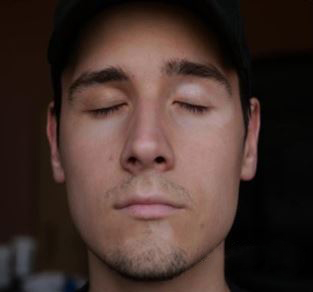
Before – white patches before the first signs of repigmentation
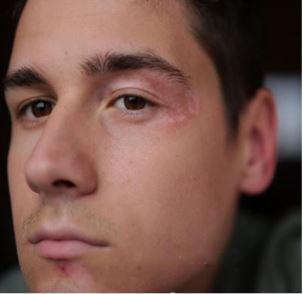
During – natural pigment gradually returning
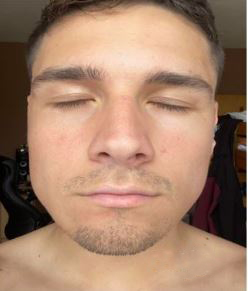
After – visible repigmentation with continued use
Customer example. Individual results and the time needed for repigmentation vary.
8 · The science
What studies say about psoralens and light
Psoralen + 311 nm NB-UVB vs NB-UVB alone. In a randomised trial, 40 patients with vitiligo had 60 NB-UVB sessions, half of them with psoralen. The psoralen group improved significantly more: 29.2 % vs 21.7 % reduction in the VASI vitiligo score, better results on the face, neck and hands, and an earlier start of repigmentation.
Bansal S, Sahoo B, Garg V. Photodermatology, Photoimmunology & Photomedicine, 2013, 29(6): 311–317. PubMed 24118425
NB-UVB is the best partner for psoralens. A 2026 systematic review of randomised trials found that NB-UVB, alone or combined with psoralen, gave better repigmentation than the older PUVA treatment (psoralen with UVA light). That is why we pair Vitistop Gel with 311 nm lamps or controlled sunlight.
de Lara Quagliotto G, et al. Dermato, 2026, 6(1): 5. doi:10.3390/dermato6010005
Plant psoralens and pigment cells. In laboratory tests, extract of Psoralea corylifolia seed, a classic natural source of psoralens, increased the growth of normal human pigment cells (melanocytes).
Open Chemistry (De Gruyter). doi:10.1515/chem-2022-0292
9 · From the founder
Tried and tested on my own skin
I'm Peter, the founder of VitiligoShop, and I have vitiligo myself. Before we offered Vitistop Gel to anyone, I used it on my own patches together with UVB light. I still remember the day I spotted the first tiny brown dots, and how week after week they slowly filled in the white areas.
Since then many customers have gone through the same journey and sent us their before-and-after photos. That is why I recommend Vitistop Gel with confidence: with a regular routine it can give your skin the chance to bring the colour back too.
10 · Complete routine
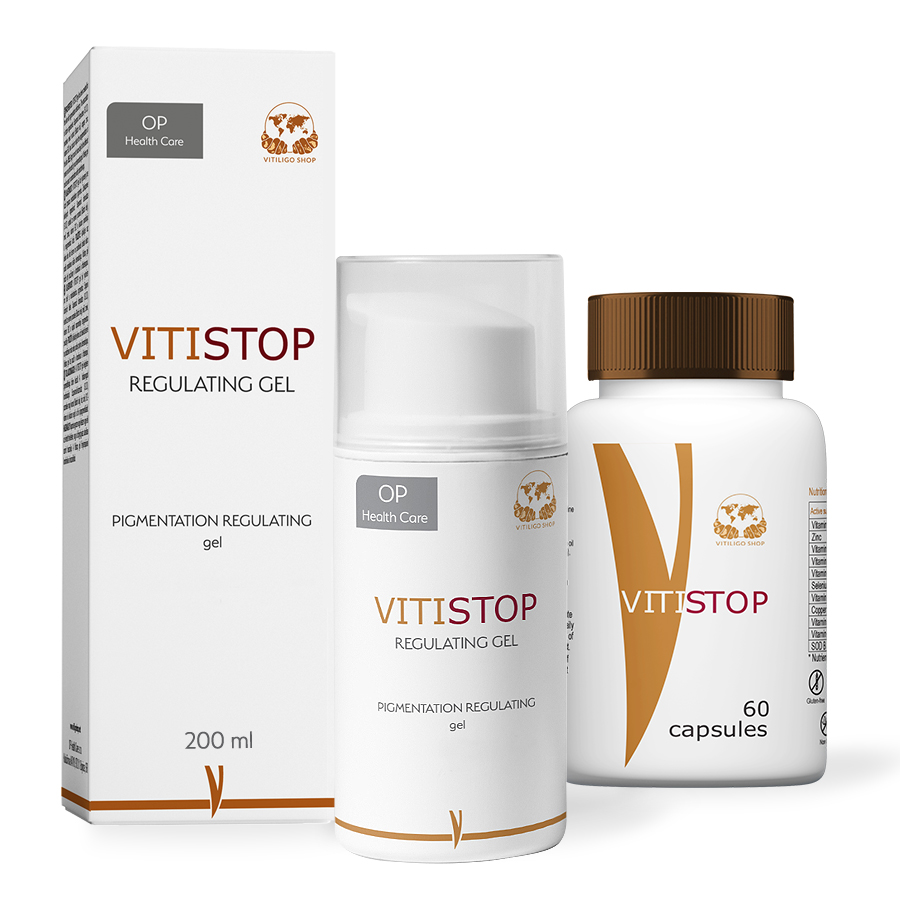
Support from outside and inside
Vitistop Tablets add nutritional and antioxidant support from within. The Vitiligo Starter Set combines 200 ml of Vitistop Gel, 60 Vitistop Tablets and a concealer for a complete routine.
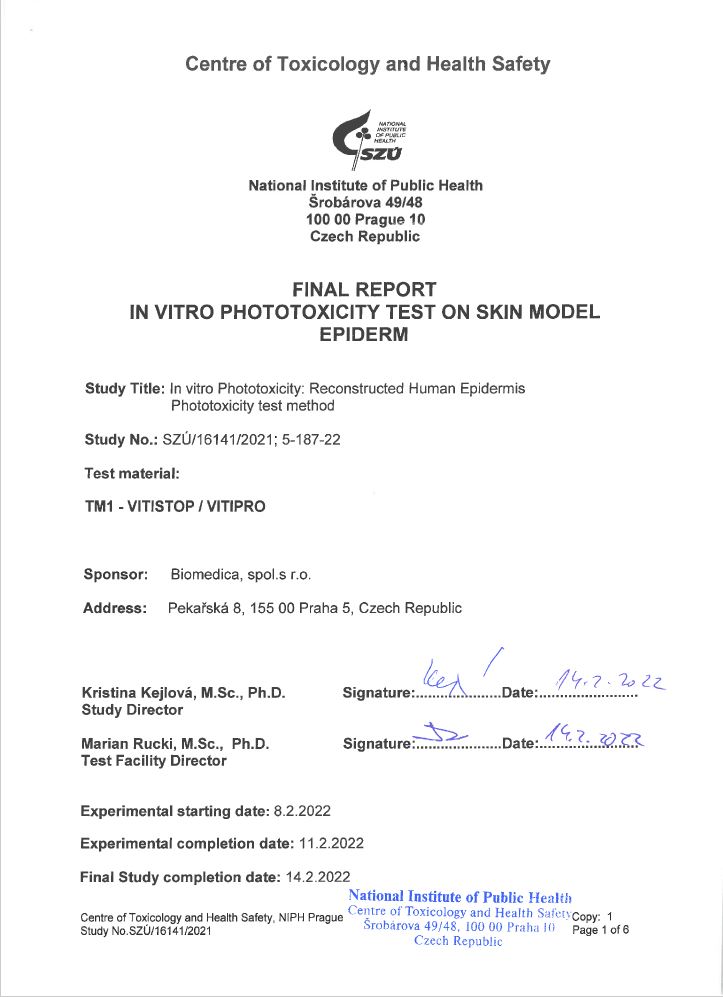
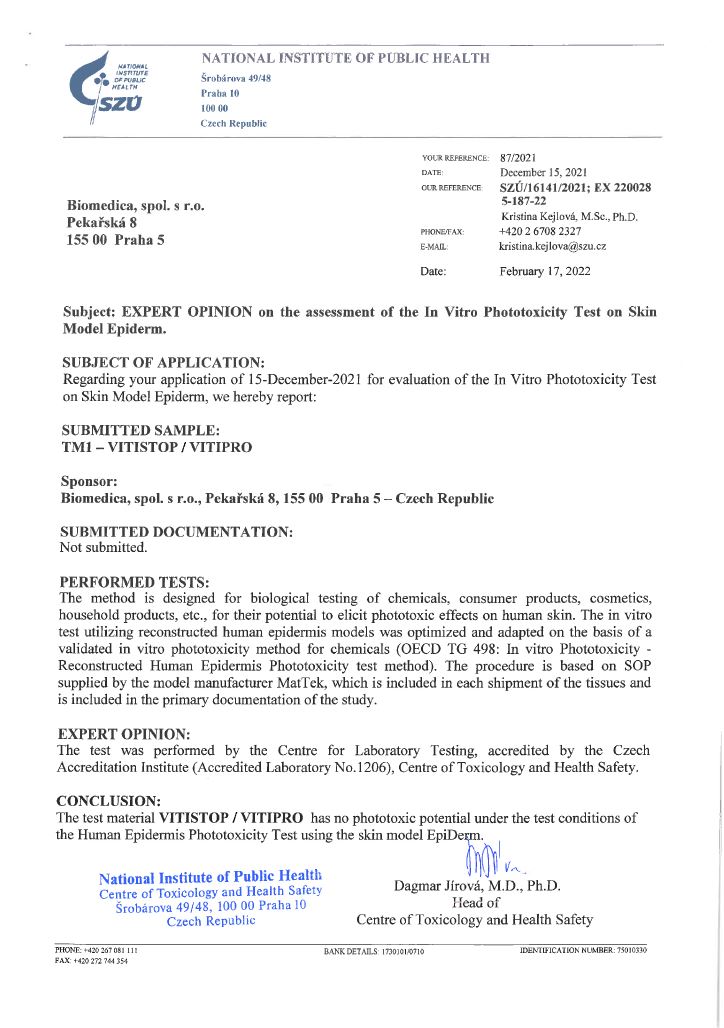
11 · Safety and certificates
Good to know
- Psoralens make the skin more sensitive to light. Start with the shortest session time and never let the skin burn.
- Do not treat skin that is red, irritated, damaged or sunburnt. Protect untreated skin from the sun.
- Avoid contact with the eyes.
- Vitistop Gel is a cosmetic product and does not replace medical advice. Individual results vary.


59 €

New comment